“Who Do You Think You Are?”: Identity, Class, and Adolescent Angst in The Breakfast Club
- Scott Barnard

- Apr 15
- 14 min read

John Hughes’s The Breakfast Club (1985) is, on the surface, a deceptively simple film: five teenagers serve a Saturday detention in the library of Shermer High School, Illinois. Nothing explodes. Nobody dies. By the end, they have simply talked. And yet the film endures as one of the most penetrating examinations of adolescent identity, social class, and the brutal machinery of conformity ever committed to American cinema. To watch it closely is to understand that Hughes was not making a teen movie so much as an existentialist drama dressed in the clothing of one.
The film’s central theme is communicated to the viewer when a teacher has assigned his detention students to write a paper on “who you think you are”. For the audience, we don’t see each student write the assessment, instead we see the students become it. Over the course of a single, claustrophobic day, the five characters - Claire Standish (the Princess), Andrew Clark (the Athlete), Brian Johnson (the Brain), Allison Reynolds (the Basket Case), and John Bender (the Criminal) - dismantle and interrogate the social identities imposed upon them, arriving at something more honest, if no less troubled, than the labels they arrived with.

Setting and Symbolism
The Breakfast Club takes place almost entirely within a single school library, a choice that is far from incidental. The library is an institution within an institution - a place of supposed knowledge and self-improvement repurposed as a site of punishment. Hughes traps his characters here deliberately, forcing proximity between people who, in the ordinary social geography of high school, would never occupy the same space. The library becomes a pressure cooker: when you cannot flee, you must eventually confront.

The Arrival: Cars as Class Signifiers
The Breakfast Club opens with the students arriving at school, and Hughes ensures we understand immediately that they do not come from the same world. Andrew arrives in a Jeep - athletic, sturdy, practically sporty - driven by a father whose ambitions for his son are written all over the vehicle. Brian is deposited from a sensible, unremarkable American family saloon, the car of people who believe in homework and college applications and doing the right thing. Claire is dropped off in a BMW - wealth made visible, the car of a girl whose father’s love is expressed materially. Allison is dropped off without ceremony or farewell from a vehicle that barely pauses for Bender as he walks across the road. His mode of arrival is not merely a detail of production design. It is the film’s first and most economical declaration of class. He does not have a car. Nobody drove him. There is no parent in the background. This is a boy without a safety net, and Hughes places him in frame against the backdrop of arriving cars to drive it home that Bender is from a different world compared to the other students.

John Bender: The Screw, The Smoke, and the Mirror
Bender is The Breakfast Club‘s engine and its most complex creation. He is cruel, funny, destructive, and - beneath the performance - desperately vulnerable. He is also the only character who actively refuses to play the role the film’s social world has written for him, even as he enacts it with virtuosic commitment.
Consider the act of removing the screw from the library door. On the surface it is petty vandalism, the kind of thing that gets Bender another month of detentions. But the gesture carries a richer symbolic charge. The screw is the thing that holds the door in place - the mechanism of institutional control, the small hardware of authority. By removing it, Bender literalises what the film will spend its entire runtime arguing: that the teacher who assigned them this detention, the authority figure demanding they examine themselves, may himself have “a screw loose.” If the students are to write a paper on who they are, Hughes is asking, perhaps it is the teacher - perhaps it is the entire system - that needs examining first. Bender’s vandalism is juvenile, but it is not meaningless. It is the act of someone who instinctively distrusts systems of authority because those systems have given him nothing.
This distrust extends to his use of marijuana. Bender smokes not because he is simply reckless, but because he has accepted - with a kind of bitter resignation - the role that his parents and teachers have cast him in. The school sees a criminal; his father treats him like an ashtray. Bender, with the defeated logic of someone who has been told who he is often enough to start believing it, obliges. He is smarter than the role he plays, and the film knows it, but he is too busy carrying the weight of a home life that has broken him to climb out from under it. When he eventually reveals the cigarette burn on his wrist - his father’s work - the film’s tonal shift is seismic. We understand, in an instant, why Bender performs himself the way he does.

“I’m Trying to Help”: Bender and Claire
Bender’s fixation on Claire is The Breakfast Club‘s most uncomfortable dynamic, and it is important not to sanitise it. He sexually harasses her. Andrew’s response - “You don’t talk to her, you don’t look at her, you don’t think about her” - is a reasonable expression of outrage. And yet Bender’s reply, “I’m trying to help,” contains its own complicated truth.
Claire is the character who clings most tenaciously to the social hierarchy. She is worshipped, admired, and wearing diamond earrings to a Saturday detention - she has internalised her privilege so completely that she barely notices it. Bender, with the particular clarity of someone who has nothing to protect, sees through her performance immediately. He picks at her not (only) out of cruelty but because she represents everything he will never have and everything he suspects is fraudulent about the world that withholds it from him. His aggression towards her is wrong, but it is also diagnostic. He can see the armour she wears because he recognises armour. He just built his from different materials.
The film is careful not to excuse Bender’s behaviour, but it is equally careful not to let Claire’s performance of victimhood go unexamined. By the end, when she gives him her diamond earring - the film’s most resonant symbolic gesture - it carries the weight of everything that has been said and unsaid between them. The earring is not just a gift. It is an acknowledgement, the currency of her world extended to someone her world says has no right to it.

The Lunch Scene: Hunger and Home Life
Perhaps no scene in The Breakfast Club is as quietly devastating as the lunch break. Each student produces their packed lunch, and the camera lingers on what they have brought: Claire’s sushi and carefully arranged delicacies; Andrew’s enormous stack of sandwiches and snacks; even Allison’s strange, compulsive arrangements. And then there is Bender - who has nothing.
The significance is not merely literal, though the fact of his hunger matters. It is the moment in which the film makes its class argument most plainly. These are students who, whatever their problems, have parents who made them lunch that morning. Someone thought about them, planned for them, packed for them. Bender does not have that. He has a home where he is burned with cigars. The packed lunches are symbols of parental care - however imperfect, however pressured, however complicated - and they represent something Bender has been denied so completely that he cannot even articulate the deprivation. He can only circle it, picking at Brian’s food and performing contempt.
It is after this scene that Bender’s imitation of his father emerges - that searing, uncomfortably accurate performance of domestic violence that silences the room. It is not played for laughs, even though it begins almost as one. It is the first real act of autobiography any of them has offered, and it changes the tenor of everything that follows. The lunch scene does not solve anything. But it makes the film’s central question - who are you? - genuinely urgent for the first time.
Identity as Product: “When You Grow Up, Your Heart Dies”
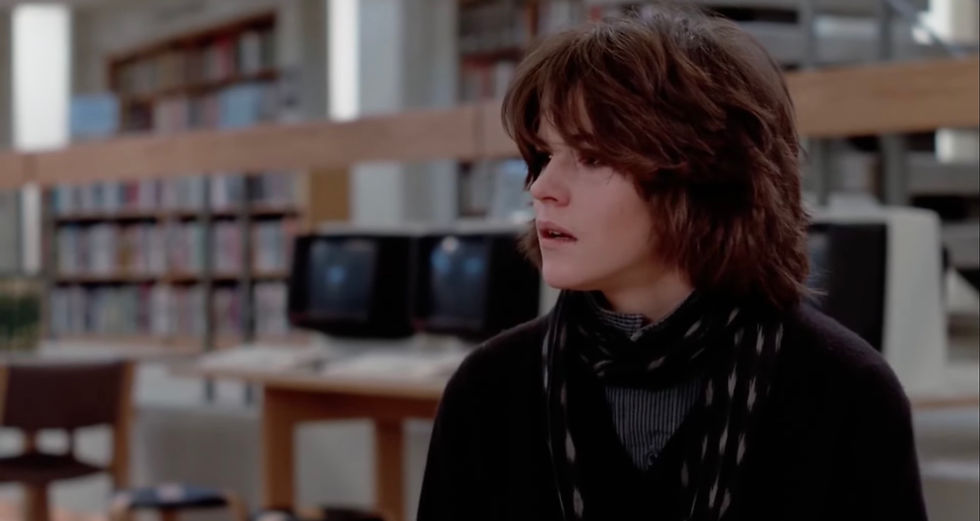
The Breakfast Club‘s thesis is delivered, with unusual explicitness, by Allison: “When you grow up, your heart dies.” It is a line of adolescent melodrama that is also, within the film’s terms, profoundly accurate. The Breakfast Club is fundamentally about the mechanisms by which individuals are shaped into social types - the process by which a child becomes a Princess, or an Athlete, or a Criminal - and the small, terrible losses that attend that transformation.
Each character’s pathology is a direct expression of their home life. Brian is suicidal because his parents’ love is conditional on academic performance. Andrew has taped up a fellow student’s buttocks because his father needs him to be dominant and unfeeling. Allison is invisible because her parents simply do not see her. Claire is the adored object of a marriage that has collapsed and is being fought over rather than loved. And Bender is a violent, self-destructive performance of exactly what his father has always told him he is.
The film’s deepest suggestion is that these students are not merely going through a phase. They are becoming. They are in the process of being moulded into the adults their particular corners of the American social world require. And the tragedy is that by the time they are old enough to resist, they may no longer be able to imagine an alternative. The inevitable question - will the friendships forged in the library survive Monday morning? - is not answered with false optimism. The film knows the answer, and it is not a comfortable one.
Themes, Codes, and Conventions
The Breakfast Club works within and against the conventions of the teen movie genre it simultaneously defines. It borrows the genre’s surface elements - the school setting, the generational conflict, the romance - and uses them to smuggle in something more philosophically ambitious. The film is structured like a pressure-release valve: containment, escalation, revelation, release. This is not accidental. It is the grammar of the confessional mode, applied to a secular space.
Its central themes can be summarised as follows: the construction of identity through social performance; the relationship between class, family, and selfhood; the violence - literal and psychological - of parental expectation; the fragility of solidarity formed outside the normal social order; and the existential anxiety of adolescence as a condition of becoming rather than being.
The concept of angst, in the philosophical sense elaborated by Søren Kierkegaard and later the existentialists, is central to the film’s emotional register. Kierkegaard’s angst describes the profound unease of a self confronted with its own freedom - the terror of having to choose who to be in a world that offers no guarantees. The Breakfast Club inhabits this condition with unusual seriousness. Its characters are not angsty in the merely theatrical, pop-cultural sense. They are genuinely confronted with the question of whether they can choose differently from the scripts they have been given - and whether, even if they can, the world outside the library will permit it.
The film’s answer is ambiguous, which is why it endures. It does not promise transformation. It promises a glimpse of one - one Saturday, in a library, between five people who will go back to being a Princess, an Athlete, a Brain, a Basket Case, and a Criminal on Monday morning. Whether they carry something of that glimpse forward is left, deliberately and honestly, to the imagination.
Tropes, Archetypes, and Subversion
The Breakfast Club is, on one level, a film constructed entirely from tropes - and on another level, a film about what happens when tropes are forced to account for themselves. The most immediately visible is the all-stereotype cast. Hughes announces his archetypes in the film’s opening voiceover, naming them with almost clinical precision: the Brain, the Athlete, the Basket Case, the Princess, the Criminal. The film does not pretend otherwise. It is, in this sense, operating in the tradition of stock character drama stretching back to classical theatre - the idea that recognisable types, placed under pressure, will reveal universal truths. Hughes simply transplanted that tradition into a suburban Illinois library.
The meaningful names reinforce this. Richard Vernon - “Dick” - the teacher whose authority the film systematically dismantles, carries his diminishment in his own name. Brian is an anagram of Brain, wearing his identity as a label. Bender bends rules, bends people, bends the social order of the room. Claire Standish is standoffish, performing social superiority as a defence mechanism. Andrew, from the Greek andreios, meaning manly or strong, is a boy whose entire identity has been built around physical dominance - and who is quietly falling apart beneath it. Hughes embeds character in nomenclature, a trick as old as Dickens, deployed here with a light and knowing touch.
Then there is the bad boy and the girl who cannot resist him - one of cinema’s most durable and least examined tropes. Claire is drawn to Bender despite, or because of, everything he represents: danger, authenticity, a life lived outside the rules her world is built on. The trope is present and Hughes does not entirely escape it. But he complicates it. Claire’s attraction to Bender is not straightforwardly romantic wish-fulfilment. It is also an act of social transgression - the diamond earring she gives him is not just a love token, it is a small, possibly temporary, rebellion against everything her parents and peers expect of her. Whether it means anything beyond Saturday is left, pointedly, unresolved.
Teen rebellion itself is a trope the film both employs and interrogates. Each character arrives performing their assigned version of it: Bender’s theatrical aggression, Allison’s studied strangeness, even Claire’s passive resistance through social superiority. But Hughes is interested in what the rebellion is for - and his answer is uncomfortable. Most of it, the film suggests, is not really rebellion at all. It is compliance in disguise. Bender smokes marijuana not because he is free but because he is fulfilling the role his parents and teachers have written for him. Andrew’s aggression is his father’s, borrowed and performed. The rebellion is the cage, painted to look like an escape.
Most significantly, The Breakfast Club became a trope in its own right. The concept now known as The Breakfast Club - a disparate group of misfits, thrown together by circumstance, forming unlikely bonds because their collective misery outweighs their differences - is one of the most replicated templates in popular culture. From superhero ensemble films to prestige television drama, the formula of Misery Loves Company is everywhere: people who have nothing in common except that nobody else will have them, discovering that this is, in fact, sufficient foundation for connection.
But what distinguishes Hughes’ original from its countless descendants is the act of subversion from within. Hughes does not simply assemble his archetypes and let them bond. He makes them turn inwards. Each character is forced, over the course of the film, to interrogate the archetype they inhabit - to ask not just who they are but who told them to be that way and whether they had any choice in the matter. The Brain nearly died because he could not be anything other than the Brain. The Athlete brutalised a classmate because he could not refuse to be the Athlete. The archetypes are not just labels in The Breakfast Club - they are prisons. And the film’s most radical gesture is to show its characters, briefly, rattling the bars - not from the outside, but from within.
A Paradigm Shift: What The Breakfast Club Did to Cinema
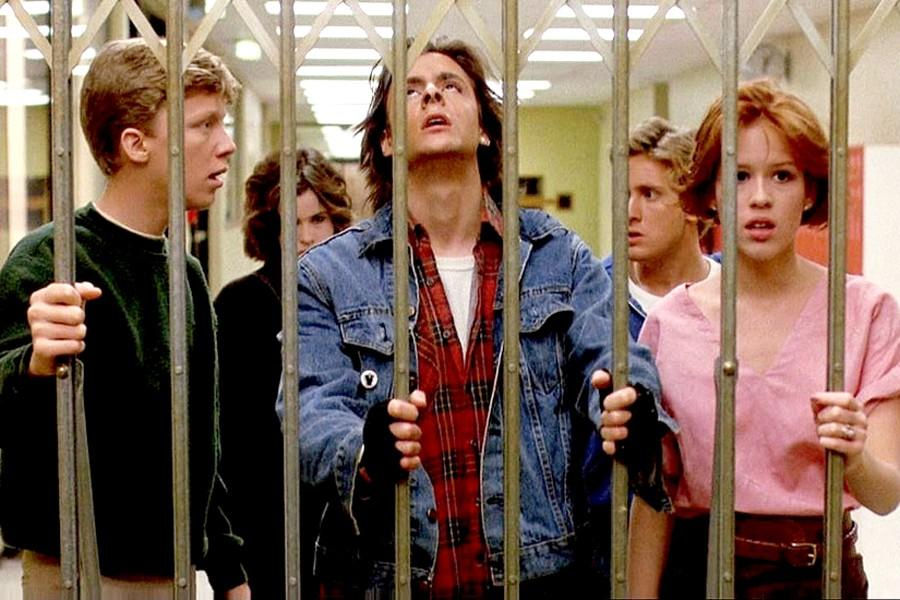
To appreciate the full significance of The Breakfast Club, it is necessary to understand what it was up against - and what it changed. Before 1985, teen films were largely event-driven. Grease (1978) has a carnival, a drag race, a musical finale. Fast Times at Ridgemont High (1982) sprawls across an entire school year. Even Hughes’ own Sixteen Candles, released the year before, is built around a birthday, a party, and a series of escalating comic incidents. Teen films did things. They moved. They were propelled by plot. The Breakfast Club refused that entirely. Hughes stripped the genre back to its barest possible premise - five people, one room, one day, talking - and discovered that the talking was the event. That is, in the context of mainstream commercial cinema in 1985, a radical act.
The limited setting was not merely a practical constraint, though constraint it certainly was. When Quentin Tarantino confined the action of Reservoir Dogs (1992) to a warehouse to keep his debut film fundable, he was working from the same instinct Hughes had demonstrated a decade earlier: that physical limitation generates dramatic intensity. If your characters cannot leave, they must eventually become honest. The setting is not a backdrop. It is the dramatic engine itself.
The pop soundtrack was equally revolutionary. Hollywood films of the era used orchestral scores or licensed period music for nostalgic effect. Hughes used contemporary pop and rock as emotional shorthand, trusting that his teenage audience shared a musical culture with his characters. Simple Minds’ Don’t You (Forget About Me) does not merely underscore the film’s ending - it is the ending. That relationship between a pop song and cinematic emotion, between a character’s interiority and a three-minute single playing over a freeze-frame, became the template for almost every teen film and television series that followed. From Pretty in Pink to Skins to Euphoria, you can draw a direct line back to Hughes standing in that library with a needle on a record.
The dialogue-heavy structure anticipates a lineage of films that would not exist in quite the same form without The Breakfast Club having demonstrated the possibility. Richard Linklater’s Before Sunrise (1995) - a film that is, essentially, two strangers walking through Vienna and talking - is perhaps the purest expression of what Hughes made possible: the idea that conversation is cinema, not a pause between the action but the action itself. Linklater had already explored similar territory with Dazed and Confused (1993), another single-day teen film, another film about the texture of young experience rather than the mechanics of plot.
The premise itself - children on a Saturday detention - is so disarmingly simple that it should not work as the foundation for a culturally significant film. And yet that simplicity is precisely the point. Hughes took a premise with the dramatic unity of classical theatre - one place, one day, a small group of people with no exit - and applied it to teenagers in suburban America. In doing so, he essentially invented a new category within the teen genre: the contained, dialogue-driven, emotionally confessional film in which the interior life of a young person is treated as sufficient dramatic material. No car chases required.
The question of whether this constitutes a paradigm shift - a fundamental reorientation of what the genre could be and do - is worth taking seriously. Lady Bird (2017), Eighth Grade (2018), Mid90s (2018): none of these films exist in quite the same form without The Breakfast Club having established that a teenager thinking and feeling and talking, in a room, is enough. That is not a small inheritance.
Contemporary Relevance: A Subject With No Expiry Date
More than four decades after its release, The Breakfast Club refuses to date. Don’t You (Forget About Me) - the film’s anthem, its emotional signature - became an instant classic precisely because forgetting is the one thing the film will not allow. But the film’s durability runs deeper than a pop song. Its preoccupations - class structure, parental control, and the bruising identity politics of high school - remain the central obsessions of American culture. From Euphoria to Stranger Things to the endless cycle of teen drama that Netflix and HBO produce each year, American media cannot stop returning to the same questions Hughes posed in a suburban Illinois library in 1985: who are you, who made you that way, and will you have the courage to be anything else?
That contemporary teenagers still find themselves in The Breakfast Club - in Bender’s fury, in Claire’s armour, in Brian’s quiet desperation - is not nostalgia. It is recognition. The archetypes have not changed because the pressures that produce them have not changed. Hughes did not make a film about the 1980s. He made a film about being young in America, and that, it turns out, is a subject with no expiry date.
Conclusion
The Breakfast Club is a film about a question that has no clean answer: who are you, when you are allowed to be no one in particular? Through its symbolism - the cars, the lunches, the screw, the earring - and its unflinching examination of class, family, and social performance, Hughes argues that identity is not discovered so much as negotiated, and that the negotiations are rarely fair. The film does not tell us the five characters become better people. It tells us they became, briefly, themselves - and leaves us to wonder whether that was enough, knowing, with the same uncomfortable clarity as its final freeze-frame, that it probably was not.
Cinematically, its ambitions were equally bold. A limited setting. A pop soundtrack. A dialogue-driven narrative. A single day. A premise so simple it was almost invisible. These were not compromises. They were a reimagining of what a teen film - what any film - was permitted to be. More than four decades later, the film refuses to date. Simple Minds’ Don’t You (Forget About Me) became an instant classic precisely because forgetting is the one thing the film will not allow - but its resonance runs deeper than a pop song. Class structure, parental control, the bruising identity politics of high school: these remain the central obsessions of American culture, and contemporary teenagers watching the film for the first time do not experience it as a period piece. They experience it as a mirror. Hughes did not make a film about the 1980s. He made a film about being young in America - and that, it turns out, is a subject with no expiry date.
Further Reading
The Breakfast Club does not exist in isolation. It belongs to a broader cinematic conversation about youth, rebellion, and the performance of identity - one that stretches from John Waters’ gleefully trashy Cry-Baby (1990) to Tim Burton’s algorithmically optimised Wednesday (2022). Where Hughes pursues sincerity, Waters parodies it; where Hughes confines his outsiders to a library, Burton sells his to a global streaming audience of millions. To read these films alongside one another is to trace the arc of how teen subculture moves from the margins to the mainstream - and what, if anything, it loses along the way.


